

15 Jun Why Singapore Schools Are Moving Toward Flexible Classroom Layouts
Why Singapore Schools Are Moving Toward Flexible Classroom Layouts
Singapore schools are undergoing a major shift in how learning spaces are designed. Traditional fixed-row seating is gradually being replaced with flexible classroom layouts that support collaboration, adaptability, and modern teaching methods.
This change is driven by evolving pedagogy, increased focus on student engagement, and the need to maximise space efficiency within Singapore’s urban school environments.
Flexible classroom design is no longer an experimental concept — it is becoming a standard direction in modern education planning.
The Shift Toward Flexible Learning Environments in Singapore
Schools in Singapore are placing stronger emphasis on student-centred learning, where teaching is no longer limited to lecture-style delivery.
Flexible classroom layouts support this shift by allowing spaces to be quickly adapted for:
- Group discussions
- Independent learning
- Project-based learning
- Interactive teaching sessions
- Digital learning integration
This adaptability allows educators to adjust classroom environments based on lesson objectives rather than being restricted by fixed furniture arrangements.
What Defines a Flexible Classroom Layout?
A flexible classroom layout is a learning environment designed with movable, modular, and reconfigurable furniture systems that allow multiple classroom setups within the same space.
Typical features include:
- Movable desks and chairs
- Modular table systems
- Multi-zone learning areas
- Lightweight, reconfigurable furniture
- Integrated collaborative learning spaces
The goal is to create a dynamic environment that supports both structured teaching and interactive learning.
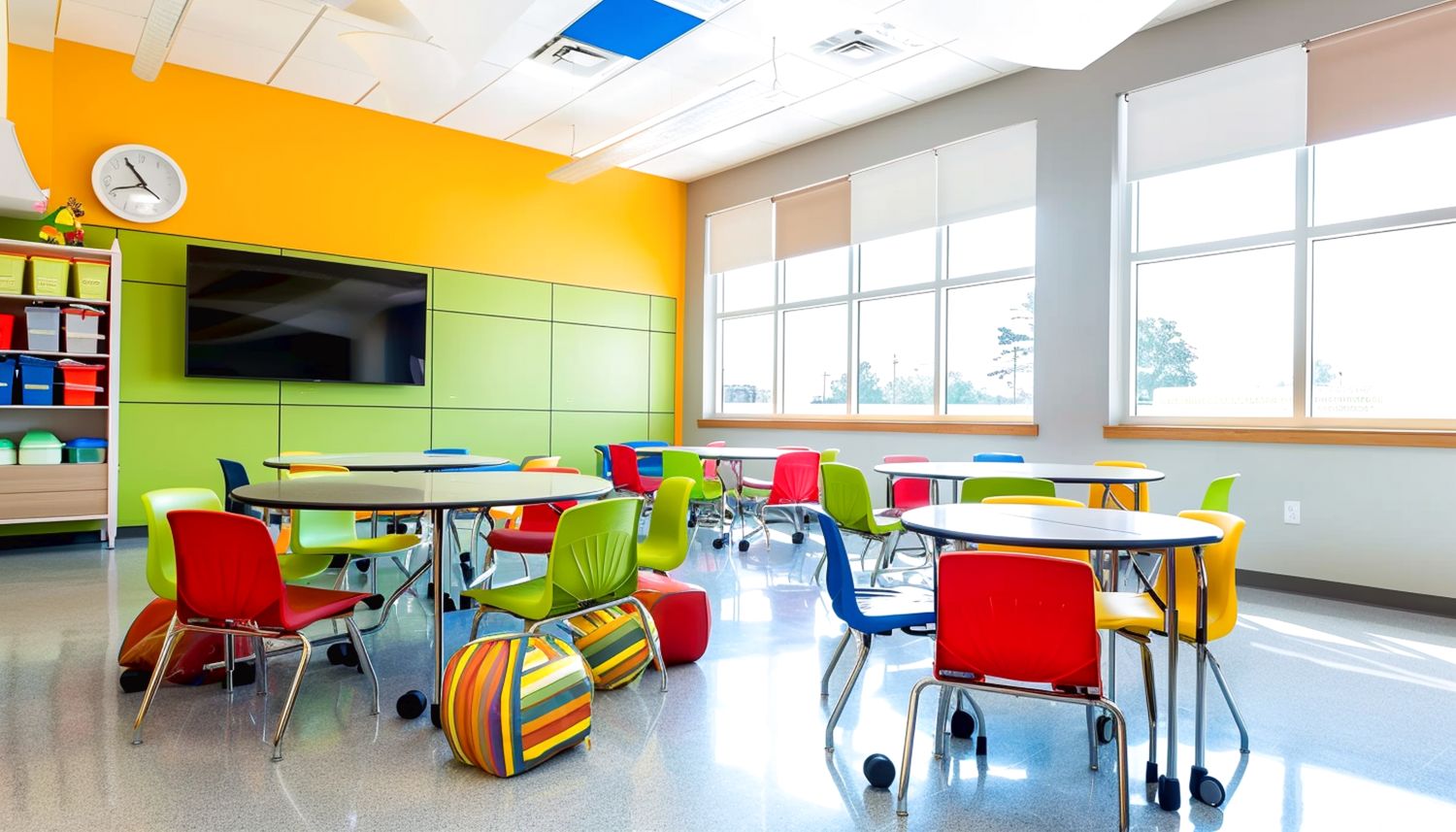
The Role of Collaborative Furniture in Modern Classrooms
Collaborative furniture plays an increasingly important supporting role in flexible classroom design.
Unlike traditional fixed seating, collaborative furniture is designed specifically to encourage group interaction, communication, and teamwork among students.
In modern Singapore classrooms, collaborative furniture is commonly used to:
- Support group-based learning activities
- Enable quick formation of discussion clusters
- Improve student engagement and participation
- Encourage peer-to-peer learning
Rather than functioning independently, collaborative furniture works alongside modular systems to create adaptable learning environments that can shift between teaching modes seamlessly.
Why Schools in Singapore Are Adopting Flexible Classroom Designs
Several key factors are driving this transformation in school furniture planning:
1. Shift Toward Active Learning Models
Education is moving away from passive listening toward active participation and collaboration.
2. Space Optimisation in Urban Schools
With limited space availability, classrooms need to serve multiple learning functions efficiently.
3. Integration of Digital Learning Tools
Modern classrooms must support devices, hybrid learning, and interactive teaching formats.
4. Future-Ready Education Framework
Schools are preparing students for skills-based learning, where collaboration and communication are essential.
Benefits of Flexible Classroom Layouts
Flexible classroom environments provide measurable benefits for both educators and students:
- Improved student engagement and participation
- Greater flexibility in teaching styles
- Enhanced classroom interaction and communication
- More efficient use of limited space
- Faster transitions between lesson formats
- Better support for group-based learning activities
When combined with collaborative furniture, these benefits are further amplified through structured teamwork and interactive learning setups.
Modular and Collaborative Furniture in School Design
Modern school furniture design is increasingly focused on adaptability and long-term usability.
Common solutions include:
- Modular desk systems that can be rearranged easily
- Stackable and mobile seating options
- Adjustable-height tables for different age groups
- Storage-integrated furniture systems
- Collaborative furniture designed for group clustering and teamwork
This combination allows schools to create flexible learning environments that can evolve as teaching needs change over time.

Space Efficiency and Classroom Optimisation in Singapore Schools
Due to land constraints in Singapore, efficient space usage is a key consideration in school design.
Flexible layouts allow a single classroom to function as multiple learning environments throughout the day without structural changes.
Collaborative furniture further supports this by enabling quick reconfiguration for group learning sessions, reducing downtime and improving overall classroom utilisation.
Collaboration Between Schools, Designers and Furniture Suppliers
Effective classroom transformation requires early collaboration between stakeholders including school administrators, interior designers, and furniture suppliers.
Engaging early in the planning process ensures:
- Better alignment between teaching needs and furniture design
- Optimised classroom layouts for different learning modes
- Improved long-term durability and usability
- Reduced redesign costs during implementation
Key Considerations When Planning Flexible Classrooms
Before implementing flexible classroom layouts, schools should evaluate:
- Durability of furniture under daily student use
- Ease of movement and reconfiguration
- Safety and stability of mobile systems
- Storage requirements for modular components
- Compatibility of collaborative furniture with group learning activities
- Integration with digital learning infrastructure
A well-planned layout ensures flexibility enhances learning without compromising structure or safety.
Conclusion:
Frequently Asked Questions (FAQs)
What is a flexible classroom layout?
A flexible classroom layout is a learning environment designed with movable and modular furniture that can be reconfigured for different teaching styles and activities.
Why are Singapore schools adopting flexible classroom designs?
Singapore schools are adopting flexible layouts to support collaborative learning, improve space efficiency, and align with modern education frameworks focused on active learning.
What is collaborative furniture in schools?
Collaborative furniture refers to specially designed classroom furniture that supports group learning, communication, and teamwork in flexible learning environments.
Does collaborative furniture improve student learning?
Yes. It encourages interaction, engagement, and teamwork, which are key components of modern education approaches.
Build Future-Ready Learning Spaces for Your School
Modern classroom transformation starts with the right planning and furniture solutions.
We work with schools, consultants, and education institutions in Singapore to design flexible classroom layouts supported by modular and collaborative furniture systems tailored to real teaching needs.
Speak with us today to request a layout proposal or consultation for your school project.